Brunello Cucinelli Cashmere: The Purest Expression of Quiet Luxury and the Most Tangible Reflection of Brand Excellence
An Editorial Analysis
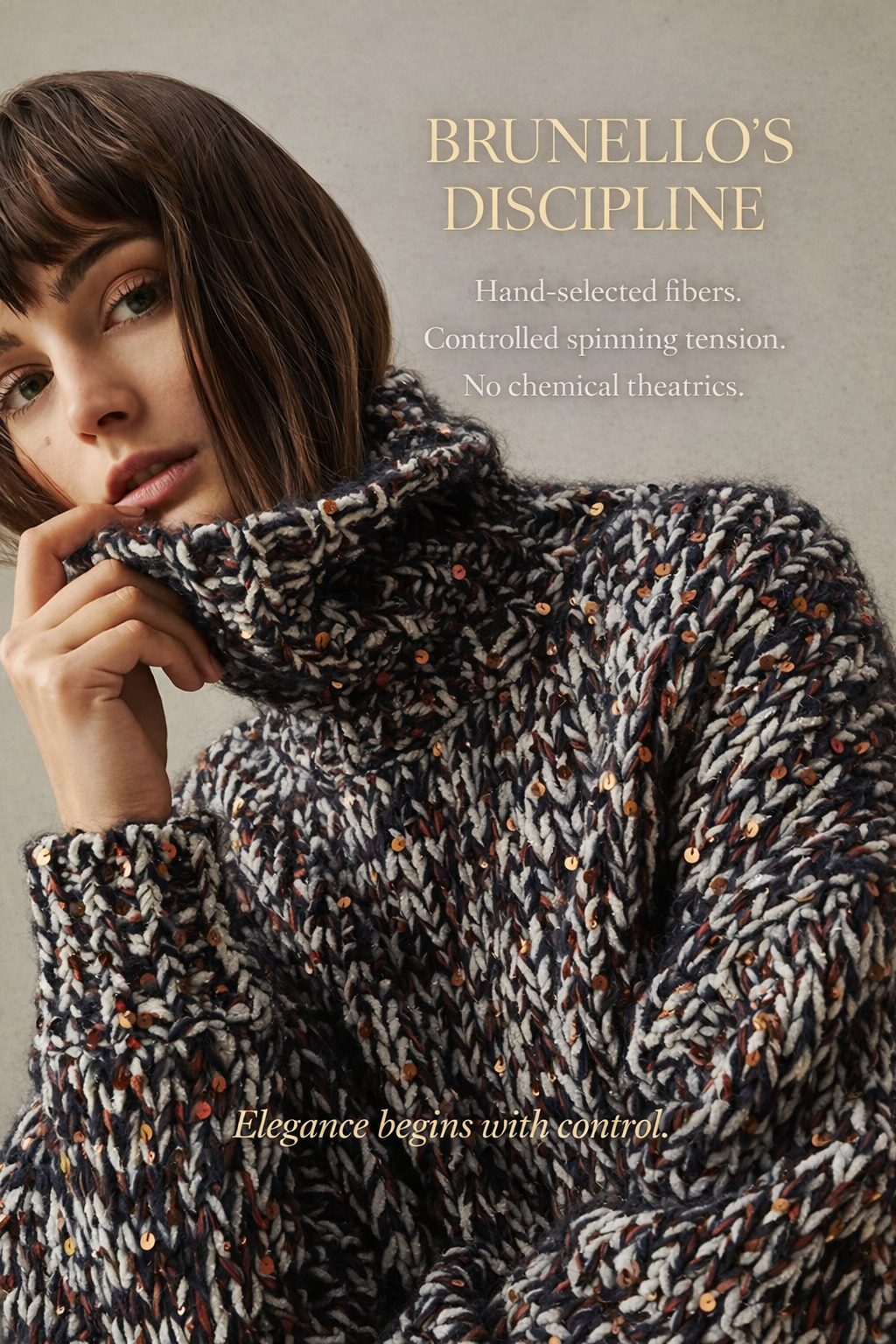
Brunello Cucinelli is widely regarded as one of the most important representatives of the “quiet luxury” movement in the luxury fashion world. However, one of the most critical elements that distinguishes the brand from others is the strategic and philosophical importance it places on cashmere. For Cucinelli, cashmere is not merely a raw material; it is the most concrete embodiment of the brand’s entire value system, its approach to craftsmanship, and its philosophy of humanistic capitalism.
In this article, we examine Brunello Cucinelli’s cashmere levels in terms of production volumes, degrees of difficulty, and product range, while also analyzing the deep parallelism between the quality hierarchy of cashmere and the brand’s overall quality philosophy.
The Reality of Cashmere in the World and Brunello Cucinelli’s Selectivity
Global cashmere production averages between 15,000 and 20,000 tons per year. The majority of this volume comes from China and Mongolia. However, the true ultra-premium segment — fibers finer than 19 microns — accounts for no more than 15–20% of total production. Cashmere below 15 microns, known as “Baby Cashmere,” represents only 0.5–1% of world production.
Brunello Cucinelli sources the most select portion of this extremely limited raw material directly from the best farms in Mongolia and processes the majority of it in its own workshops in Solomeo, Italy. The brand classifies its cashmere into three main levels, and each level perfectly aligns with Cucinelli’s overall brand philosophy.
Brunello Cucinelli Cashmere Levels
1. Baby Cashmere – The Finest and Rarest Level Fiber fineness: 13.5 – 15 microns Annual global production: Approximately 100 – 150 tons Production difficulty: Extremely high
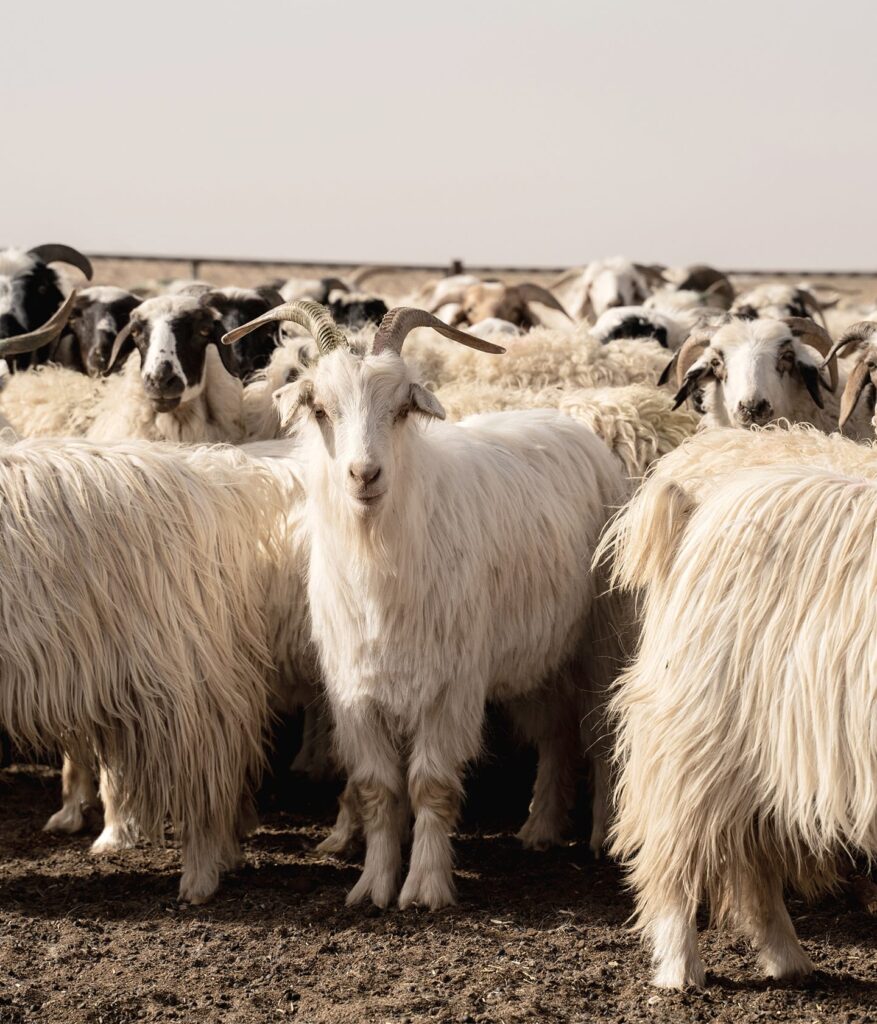
This level is obtained from the first undercoat of Hircus goats that have not yet reached one year of age. A single goat produces only 150–250 grams per year, making it extremely limited. Brunello Cucinelli uses Baby Cashmere in its most exclusive collections, particularly in fine knitwear, scarves, hoodies, and limited-edition pieces. This level is the very embodiment of the brand’s understanding of “rarity and perfection.”
2. Fine Cashmere – Premium Level (The Brand’s Signature) Fiber fineness: 15 – 16.5 microns Annual global production: Approximately 1,000 – 1,500 tons Production difficulty: High
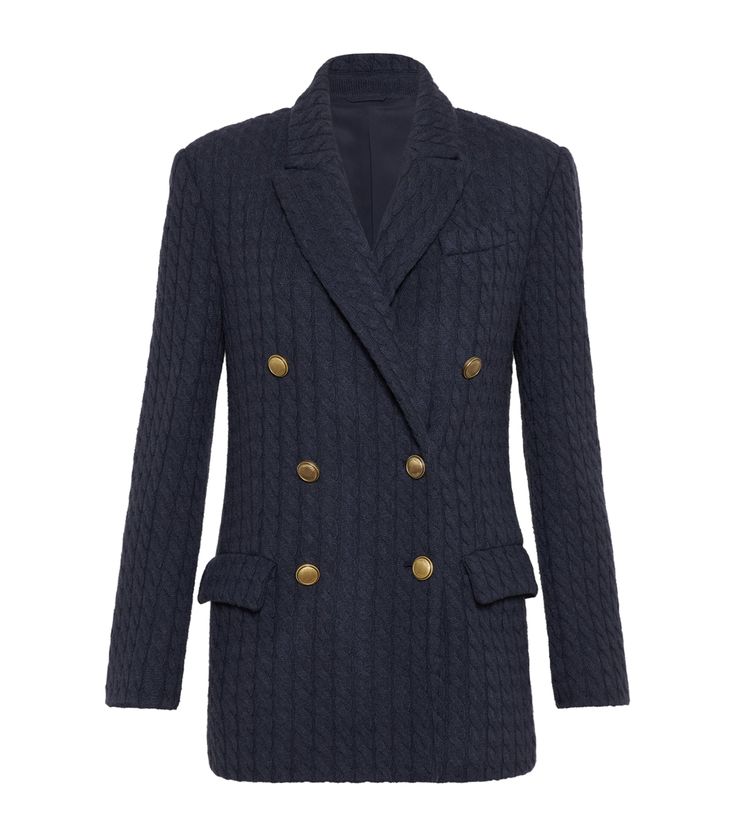
This is the most frequently used quality in Brunello Cucinelli’s main collections. It is preferred in classic sweaters, polo shirts, jackets, and most outerwear pieces. This level offers the ideal balance between softness and durability and is the one that best reflects the brand’s concept of “everyday luxury.”
3. Classic Cashmere – Upper Level Fiber fineness: 16.5 – 19 microns Annual global production: Significantly higher volume Production difficulty: Medium to high
This level is used in more accessible, everyday products such as basic sweaters, base layers, and certain outerwear pieces. Although durability is the priority, Cucinelli still maintains a high percentage of handwork according to its standards.
The Parallelism Between Cashmere Quality and Brunello Cucinelli Brand Quality
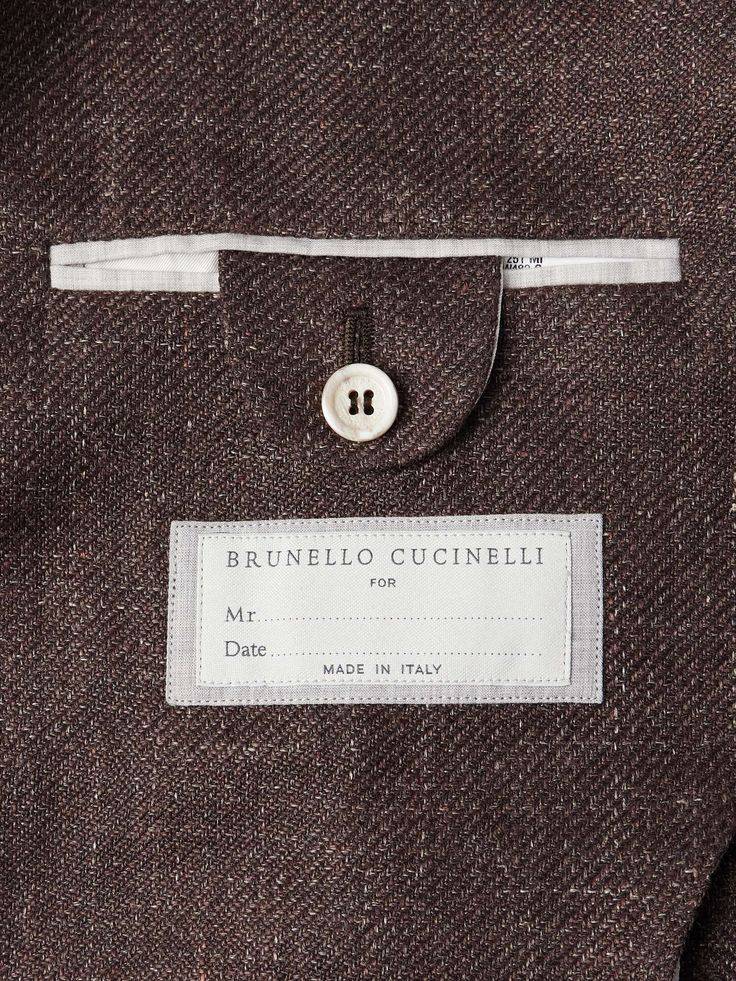
Brunello Cucinelli’s approach to cashmere perfectly mirrors the brand’s overall philosophy. This parallelism manifests itself in the following points:
- Rarity and Selectivity: Just as Baby Cashmere accounts for only 0.5–1% of global production, Cucinelli deliberately keeps its collections and growth limited. Instead of aggressive expansion, the brand prefers controlled and dignified growth. This is the reflection of the brand’s “less but better” stance, starting from the raw material itself.
- Craftsmanship and Human-Centered Production: Cucinelli continues to use a very high percentage of handwork in the processing of cashmere. This approach is entirely consistent with the “humanistic capitalism” philosophy that the brand advocates in general. The value given to artisans in Solomeo is also clearly visible in the cashmere production process.
- Sustainability and Ethical Approach: The brand adopts a combing method that does not harm the goats and directly controls its supply chain. This is the concrete form of Cucinelli’s principle of “respect for nature and humanity.”
- Timeless Quality: Cucinelli cashmere is produced not according to trends, but to a quality that can be used for many years. This is in perfect parallel with the brand’s overall “quiet luxury” stance: permanence, not ostentation, is the priority.
In short, in Brunello Cucinelli, cashmere quality is the most tangible and perceptible reflection of the brand’s quality understanding. This approach, which reaches its peak with Baby Cashmere, has brought the brand both prestige and long-term differentiation.
Brunello Cucinelli has transformed cashmere from a fashion material into a cultural and philosophical element. For this reason, together with Loro Piana, it is today one of the brands that dominate the highest segment of cashmere.
“My father would return home from the factory with tears in his eyes. It wasn’t his salary that hurt him—it was the inhuman treatment.”
Brunello Cucinelli’s story begins far from the glamorous corridors of the luxury fashion world, in the Umbrian countryside. Born in 1953 in Castel Rigone, in a farmhouse without electricity or running water, Cucinelli spent a childhood immersed in the earth. When he moved with his family to Perugia at fifteen, he encountered modern household appliances, but what struck him most was the treatment his father endured at the factory. This experience would shape the foundational philosophy of the empire he would later build: a capitalism centered on human dignity.
1978: The First Step of a Revolution
A trained geometra who began studying engineering but never graduated, Cucinelli decided in 1978 to start a small business with a loan. The cashmere market of the era was dominated by natural tones—beige, gray, cream. Cucinelli’s revolutionary idea was to dye cashmere. Though this idea seemed madness to the master dyers of the time, the young entrepreneur’s vision would prove him right.
He produced his first sixty sweaters on credit from a yarn supplier who said, “Pay when you can.” A journey then began, extending to South Tyrol and then to Germany. The German market became the first international stop in Brunello Cucinelli brand history.
1985: The Return to Solomeo
1985 was the year that changed the brand’s destiny. Cucinelli purchased a dilapidated medieval castle in Solomeo, his wife Federica’s hometown. This was not merely a business center; it was the place where a philosophy, a way of life, would be built. In this village—still the brand’s headquarters today—Cucinelli constructed not only production facilities but also a theater, a library, a “Sanctuary of Spirituality,” and artisan schools.
2. Brunello Cucinelli Market Position: Hermès’s Italian Brother
Brunello Cucinelli market position is unique in the luxury sector. While many competitors have struggled with declining demand in recent years (with contractions of 2% to 5% expected), Cucinelli continues to grow at double-digit rates. In the first nine months of 2025, the brand surpassed €1 billion in revenue for the first time. Growth of approximately 10% is projected for the full year 2025.
Geographic Distribution and Revenue Structure
The brand’s revenues show a balanced distribution across regions:
| Region | Revenue Share (2024) | Growth (First Half 2025) |
|---|---|---|
| Americas | 37.3% | +8.7% |
| Asia | 27% | +12.5% |
| Europe | 24.7% | +10% |
| Italy | 11% | +15.8% |
Approximately 50% of revenue comes from women’s collections and 50% from men’s collections. Ready-to-wear accounts for 85% of total revenue, while accessories represent 15%. Cashmere products constitute approximately 50% of total activity.
The Secret of Its Position: The “Tortoise Strategy”
One of the luxury sector’s biggest problems in recent years has been brands devaluing themselves through excessive growth ambition. Cucinelli takes a different approach. The brand positions itself as “the tortoise opposite the hare.”
His response to a Chinese investor’s suggestion of “more stores, more investment” summarizes this brand strategy: “Listen, I think you can return to Shanghai immediately. There’s no question of us changing our strategy.” According to Cucinelli, while 30% growth is possible for a year or two, the subsequent slowdown is inevitable—and the brand’s most valuable asset, exclusivity, would be lost.
This prudent growth strategy has preserved the brand’s position at the summit of luxury. In Bank of America’s August 2025 assessment, Cucinelli was described as the only luxury brand in their coverage “expected to sustain double-digit revenue growth.”
3. Humanistic Capitalism: The Philosophical Foundation of the Strategy
Brunello Cucinelli’s market strategy extends beyond pricing and distribution policies. At the brand’s foundation lies a philosophy its founder calls “humanistic capitalism.”
1. Employee Welfare
Workers in Solomeo earn approximately 20-25% above the Italian industrial average. The brand allocates 20% of its annual profits to philanthropic activities.
2. Supply Chain Transparency
Cucinelli maintains direct relationships with approximately 400 external suppliers, avoiding the risks associated with subcontracting. As Professor Hakan Karaosman of Politecnico di Milano emphasizes, Cucinelli knows his suppliers by name, and they have his phone number—an “unheard of” situation in the industry.
3. Philosophy of Profit
Cucinelli believes profit should be “reasonable.” When the company went public in 2012, he told investors: “If you are looking for a company that pursues profit maximization at the expense of its employees and supply chain by increasing profitability every year, do not buy our shares. We will never do that.”
4. Global Leadership in Cashmere: The Reality Behind the King of Cashmere Title
Brunello Cucinelli is known in the global cashmere industry as the “King of Cashmere.” This title encapsulates the brand’s industry position, quality philosophy, and pricing power.
Quality Hierarchy in Cashmere
In the world of cashmere, quality tiers are determined by geography, the age of the goat, and the body region. Here is Brunello Cucinelli’s place in this hierarchy:
| Tier | Characteristics | Brands |
|---|---|---|
| Peak | Finest fibers (≤14 microns), only from goat’s throat and belly, hand-harvested, processed in Italy | Brunello Cucinelli, Loro Piana (peak segment) |
| High-End | 15-16 micron fibers, sourced from Mongolia and Inner Mongolia | Loro Piana (main collection), Colombo |
| Mid-Tier | Standard quality cashmere, 16-18 microns | Ermenegildo Zegna, Malo |
| Entry Level | Shorter fibers, lower density knit | Massimo Dutti, other high street brands |
5. Brunello Cucinelli Cashmere Levels and Quality Hierarchy
Brunello Cucinelli cashmere levels directly reflect the brand’s product range and quality philosophy. Here are the detailed quality tiers:
Level 1: Baby Cashmere
- Fiber Thickness: 13-14 microns
- Source: First fleece of goats aged 6-12 months
- Characteristics: 30-40% finer and softer than adult goat cashmere
- Production Quantity: Only one harvest per goat in its lifetime
- Cucinelli’s Approach: The brand uses this ultra-premium tier in limited collections
Level 2: Royal Cashmere
- Fiber Thickness: 14-15 microns
- Source: Goat’s throat (hýggja) and belly regions
- Characteristics: Longest fibers (35-40 mm), minimal shedding
- Cucinelli’s Approach: Forms the foundation of the brand’s main collections
Level 3: Premium Cashmere
- Fiber Thickness: 15-16 microns
- Source: Goat’s back and side regions
- Characteristics: Clearly superior quality compared to standard cashmere
- Cucinelli’s Approach: Used in accessories and heavier knit products
Level 4: Cashmere Blends
- Composition: Cashmere + silk, cashmere + wool, cashmere + vicuña
- Characteristics: Collections seeking different textures and sheens
- Cucinelli’s Approach: Silk-cashmere blends are among the brand’s signature products
Geographic Differences in Cashmere
Brunello Cucinelli sources its cashmere from Mongolia and Inner Mongolia. These regions produce the world’s highest quality cashmere:
| Geography | Fiber Thickness | Characteristics |
|---|---|---|
| Inner Mongolia (Alashan) | 14-15 microns | World’s finest cashmere, high tensile strength |
| Mongolia (Gobi) | 15-16 microns | Long fiber structure, natural luster |
| Afghanistan | 17-19 microns | Coarser fibers, lower cost production |
| Iran | 18-20 microns | Industrial use, lower quality |
6. Why Is Brunello Cucinelli Expensive? 6 Factors Determining the Price
The question “Why is Brunello Cucinelli expensive?” is among the most frequently asked by luxury consumers. A T-shirt starts at €350, while a cashmere sweater exceeds €2,000. What lies behind this price?
| Factor | Explanation | Impact on Price |
|---|---|---|
| Raw Material | Finest cashmere fibers (below 14 microns), hand-harvested from the goat’s most valuable regions. 3-5 times more expensive than standard cashmere. | ★★★★★ |
| Craftsmanship | Hand production in Solomeo. Production time per sweater ranges from 3-8 hours. Italian labor costs (20-25% premium) | ★★★★☆ |
| Dyeing | Vegetable-based dyes, layered processing for color fastness using traditional methods. 2-3 times more costly than chemical dyes. | ★★★☆☆ |
| Single-Ply Technology | Maximum lightness and softness through single-ply knitting technique. More delicate than multi-ply knits, requiring more precise craftsmanship. | ★★★★☆ |
| Quality Control | Minimum 6 quality control checks per product. Defective products never reach market. | ★★☆☆☆ |
| Brand Value | Over 40 years of reputation, peak position in the “quiet luxury” category. Same league as Hermès. | ★★★★★ |
Production Technique: The Pinnacle of Italian Artisanship
Brunello Cucinelli’s production technique differs entirely from industrial manufacturing:
- Hand Harvesting: Cashmere fibers are hand-collected during the goats’ natural molting season. This method preserves fiber integrity.
- Processing in Solomeo: The entire production chain is based in Italy. In the Solomeo workshops, each product undergoes multiple rounds of hand processing.
- Single-Ply Technology: The brand’s signature single-ply knitting technique means the yarn is knitted in a single layer. This maximizes the fabric’s lightness and softness. Standard cashmere sweaters are typically knitted with two or three plies, making them heavier and less flexible.
- Color Philosophy: The brand’s color palette is described as “earth tones”—beige, sand, stone, brick, olive green, burgundy. These colors draw inspiration from the Umbrian countryside surrounding Solomeo.
7. Iconic Features, Current Status, and Future Projections
“Sprezzatura”: Invisible Elegance
Brunello Cucinelli’s aesthetic is defined by what Italians call sprezzatura—a studied nonchalance, a natural-seeming elegance where every detail is meticulously designed but never appears labored. The brand’s products bear no visible logos. As one of the strongest representatives of “quiet luxury,” Cucinelli offers its consumers an understated yet discernible status.
Current Challenges
Like any success story, Brunello Cucinelli faces certain challenges today:
- The Russia Issue: In September 2025, a report by Morpheus Research claimed the brand continued operating in the Russian market despite sanctions. Following this news, share prices fell by up to 17%. Cucinelli stated they were complying with European regulations.
- Discount Debate: The same report alleged that the brand engaged in discounts inappropriate for its luxury positioning.
- Market Value: Despite these controversies, the brand’s market value stands at approximately $8 billion as of 2026, with share prices having increased roughly 10-fold since its 2012 IPO.
Future Projection
The brand completed its “Made in Italy” handcrafted production investment plan for 2024-2026 in November 2025, eight months ahead of schedule. This investment will secure Cucinelli’s production capacity through 2035.
Cucinelli reports that orders for the Spring-Summer 2026 men’s collection are “very, very positive” and projects “healthy and beautiful” growth of approximately 10% for 2025-2026.
8. Conclusion: The Triumph of a Philosophy
Brunello Cucinelli today is not merely a fashion brand; it is the embodiment of a philosophy of life. This Umbrian farmer’s son, building a capitalism centered on human dignity in a medieval village, has offered the luxury sector not just expensive sweaters but an alternative model.
His cashmere is not merely a fiber; it is a symbol of ethical production, artisanal tradition, and “slow luxury.” Referred to as Hermès’s Italian brother, this brand proves that the future of luxury lies not in ostentation but in depth.
As its founder often repeats: “I look to the future with absolute confidence and to the past with great respect.” And this gaze finds form today within the stone walls of Solomeo, in the story of the thousands of hands that bring to life the world’s finest cashmere.