A Machine Beyond Time, A Legacy Beyond Price
I. THE QUIET BIRTH OF AN ICON
When racing was not marketing, but identity
There are automobiles, and then there are statements of civilization.
The Ferrari 250 GTO was never designed to impress. It was not created for admiration, nor for display windows. It emerged from a time when engineering was still guided by instinct, when speed was not a number but a pursuit of purity.
In the early 1960s, Enzo Ferrari faced a defining challenge. Ferrari needed dominance in the FIA’s Group 3 Grand Touring category—a battlefield where prestige was earned not through branding, but through victory. The answer was not evolution, but refinement at its most disciplined form.
The 250 GTO was born not as a new creation, but as the ultimate distillation of everything Ferrari had learned.
It was built quietly.
Exclusively.
And with intent.
Only those personally approved by Enzo himself could acquire one. Ownership was not a transaction—it was a selection.
From the outside, it appeared elegant.
From within, it was ruthless.
l Cavallino’s Magnum Opus
In the pantheon of automotive history, few names are uttered with the same reverent hush reserved for the Ferrari 250 GTO. It is not merely a car; it is the quintessential expression of mechanical art, a machine whose creation story is as dramatic as its performance on the tarmac. To understand the GTO is to understand the very soul of Maranello—a tale of homologation gambits, engineering audacity, and the birth of a legend whose price now eclipses the value of the Renaissance masters it shares a gallery with.
I. THE BIRTH OF A LEGEND: Homologation and Hubris
The Genesis of a Champion
The early 1960s were a crucible for Ferrari. Enzo Ferrari, Il Commendatore, was a man driven by a singular obsession: victory on the racetrack. The FIA’s newly announced International Championship for GT Manufacturers for 1962 presented both an opportunity and a formidable challenge. To compete, Ferrari needed a new car, one that would not only dominate the circuits but also satisfy the labyrinthine homologation rules. The FIA demanded a production run of at least 100 units of a given model to qualify it as a “Grand Touring” car—a number that was both financially daunting and logistically complex for the small workshop in Maranello.
The car in question was to be the successor to the venerable 250 GT SWB. Enzo Ferrari tasked his engineers—chief among them Giotto Bizzarrini, Carlo Chiti, and later Mauro Forghieri—with a seemingly impossible mission. They were to take the existing 250 GT chassis and evolve it into something that could challenge the new Jaguar E-Type Lightweights and the dominant Aston Martin Project cars.
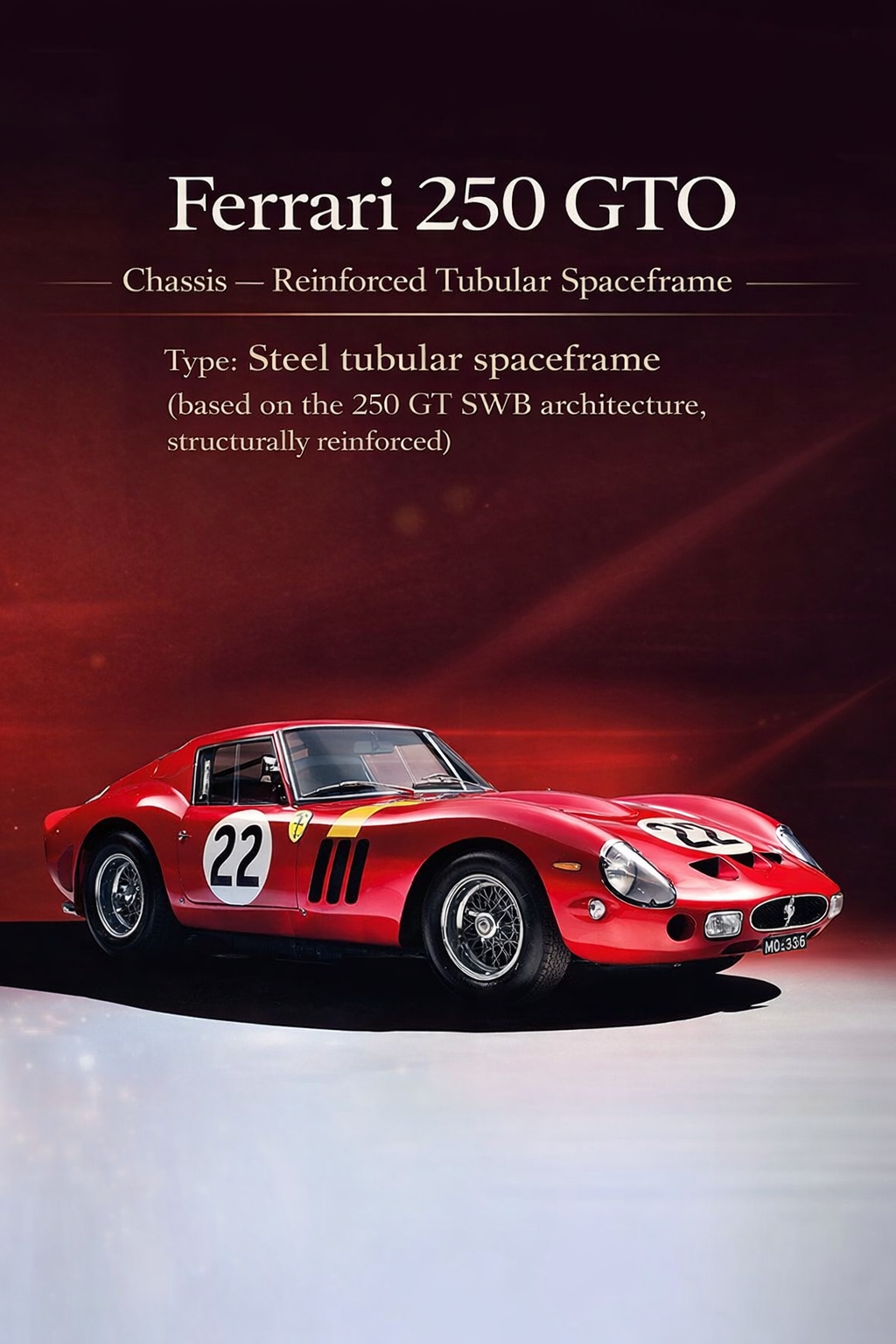
What emerged from the drafting tables was nothing short of a revolution. The 250 GTO (Gran Turismo Omologato) was a masterpiece of evoluzione. Bizzarrini’s chassis was a work of structural perfection, utilizing a tubular steel frame that was both lighter and stiffer than its predecessor. But it was the bodywork that announced the car’s intentions. Collaborating with the Scaglietti workshop, the team crafted a shape that was less about beauty and everything about aerodynamics—a concept still in its infancy in road car design.
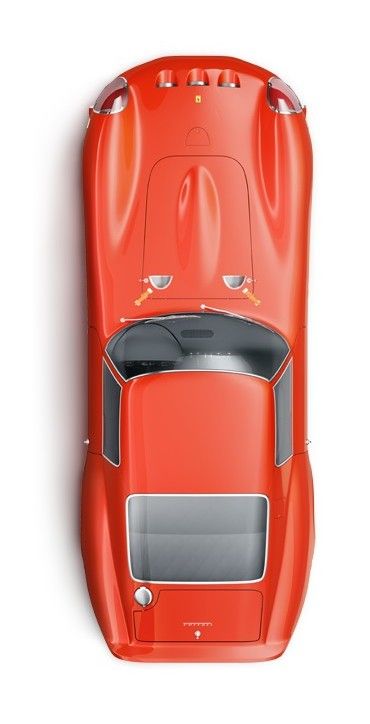
Legend has it that the first prototype, designated *s/n 2643GT*, was built in secrecy. The car was designed around the existing 250 engine and transmission, but the body was sculpted by wind, not whimsy. Its long, protruding nose, the subtle Kamm tail, and the now-iconic “shark nose” with its integrated air intakes were all calculated to reduce drag and increase high-speed stability. The result was a car that, at the time, was controversial for its lack of traditional elegance but was undeniably purposeful.
The impact on the brand was immediate and profound. While Ferrari had long been associated with racing success, the GTO elevated it to a new stratum of engineering prowess. It signaled that Ferrari was not merely a manufacturer of fast cars but a scientific institution where form followed function with a religious fervor. It solidified the brand’s identity as the ultimate purveyor of racing machines for the road, a mantle it holds to this day.
II. MECHANICAL SYMPHONY: Engineering Ahead of Its Time
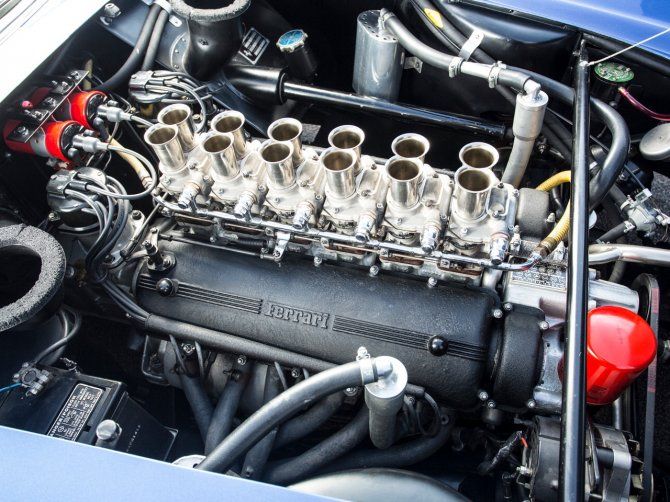
To lift the bonnet of a 250 GTO is to gaze upon an engine that is widely considered one of the finest ever conceived: the Tipo 168/62 V12. Displacing 2,953 cc, this Colombo-designed masterpiece was fed by six Weber 38 DCN carburetors and produced a staggering 300 horsepower at 7,500 rpm in its race trim. For the early 1960s, this was a stratospheric figure.
A. The Heart of the Beast: The V12
The engine was a testament to high-revving performance, a concept that was far from standard in the era of lazy American V8s. The 250 GTO’s V12 utilized a dry sump lubrication system—a technology borrowed directly from Formula 1. This allowed the engine to sit lower in the chassis, drastically lowering the center of gravity and enabling the car to sustain high lateral G-forces during cornering without oil starvation. It was a piece of racing technology that had rarely been seen in a production-based GT car.
B. Aerodynamics: The Invisible Sculptor
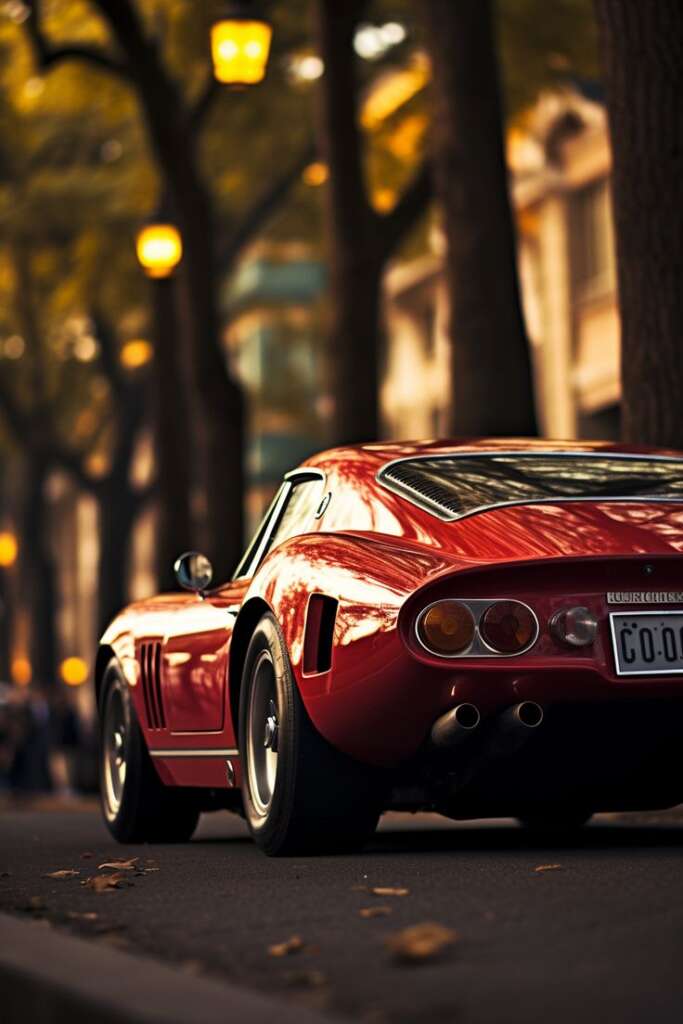
Where the GTO truly transcended its era was in its approach to aerodynamics. Before wind tunnels were commonplace in automotive design, Ferrari and Scaglietti were already experimenting with drag coefficients. The GTO achieved a Cd (coefficient of drag) of approximately 0.32, an astonishing figure for a boxy-arched, front-engine car from 1962. The integration of the “A-pillar” air vents to extract pressure from the wheel wells, the careful shaping of the rear spoiler (which was not just a decorative lip but a functional Gurney flap), and the flat underbody were all pioneering features designed to manage airflow in ways that would not become standard industry practice for another two decades.
C. The Chassis and Mechanicals
The suspension system was equally advanced. It utilized unequal-length wishbones with coil springs and an anti-roll bar at the front, while the rear employed a live axle located by radius arms, a Watt’s linkage, and coil springs. This setup, combined with massive four-wheel disc brakes (a technology still considered exotic on road cars), gave the GTO a level of stopping power and handling precision that was virtually unmatched. The Borrani wire wheels, center-lock for quick changes, completed the package, providing lightness and strength.
III. THE ICON: Market Ascendancy and Eternal Legacy
Production Numbers: The Rarity Factor
Only 36 examples of the Ferrari 250 GTO were ever built between 1962 and 1964 (including the later Series II models with the revised bodywork). This scarcity is the first pillar of its legend. The homologation target of 100 was never reached; Ferrari essentially bluffed his way through the FIA, leveraging his influence to have the car accepted. This limited run transformed the GTO from a mere racing car into the ultimate collector’s trophy before it even retired from competition.
Why It Became a Legend
The GTO’s status was forged in fire. Between 1962 and 1965, it won the FIA’s International Championship for GT Manufacturers three times in a row. It was not merely a participant; it was the dominant force. Drivers like Phil Hill, Stirling Moss, and Giancarlo Baghetti piloted these cars to victory at iconic venues like the Targa Florio, the Tour de France Automobile, and the 24 Hours of Le Mans (winning its class). This relentless track record created an aura of invincibility.
What makes it “iconic” is the purity of its purpose. It was not a car built for comfort or luxury. It was a homologation special in the truest sense: a racing car barely disguised as a road car. The interior is spartan—a leather-wrapped dashboard with a simple wooden Nardi steering wheel and a set of Jaeger gauges. The driving position, the noise, the heat from the transmission tunnel—all are uncompromising reminders that this machine was built for one purpose only: to go faster than anything else.
The Modern Era: The Multi-Million Dollar Question
In the present day, the Ferrari 250 GTO has transcended the automotive market to become a global financial asset. For decades, it has held the record for the highest price paid for a car at public auction and private sale. In 2018, chassis number 4153GT famously sold in a private transaction for a reported $70 million, cementing its status as the most valuable car in history.
For the “old money” collector, the GTO is the ultimate acquisition—the one car that validates a collection. It is not merely an investment; it is a patrimonial asset. Owning a GTO is akin to owning a Botticelli or a prime piece of Manhattan real estate. Its value is underpinned not by speculation but by an immutable combination of historical significance, unparalleled engineering, and a racing pedigree that remains untouchable. In the rarefied atmosphere of the world’s elite concours—from Pebble Beach to Villa d’Este—the 250 GTO remains the undisputed Prima Donna, the car around which entire events are built.
In conclusion, the Ferrari 250 GTO is more than a car
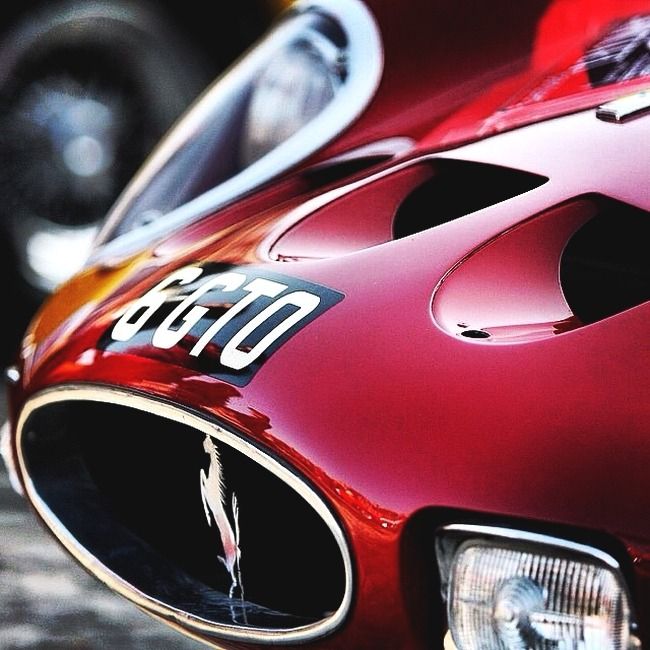
Technical Analysis and Engineering Decadence
As an engineer and energy expert, I am certain you will appreciate the mathematical rhythm beneath the hood of the GTO. This vehicle offered technologies far ahead of its time through pure mechanical discipline:
- The Symphony of the V12: At the heart of the car lies the legendary 3.0-liter “Tipo 168/62” V12 engine designed by Gioacchino Colombo.
- Colombo Design: This unit produces 300 horsepower and earns the “250” name because each cylinder has a displacement of approximately 250cc.
- Aerodynamic Firsts: The GTO is one of the first Ferrari models to utilize a wind tunnel during its development process.
- The Rear Spoiler: The iconic integrated rear spoiler was a stroke of engineering genius designed to provide downforce on the rear axle at high speeds.
- Dry Sump System: This system, which ensures lubrication is never interrupted under high G-forces on the racetrack, was a pure racing technology for its era.
- Lightweight Engineering: The chassis is a trellis structure composed of oval and circular tubes.
- Aluminum Bodywork: The aluminum body panels are so thin they can be deformed by a misplaced touch, keeping the car’s total weight around a remarkable 880 kg.
- Watt’s Linkage: The use of this geometry in the rear suspension restricted the lateral movement of the live axle, pushing cornering capabilities beyond its contemporaries.
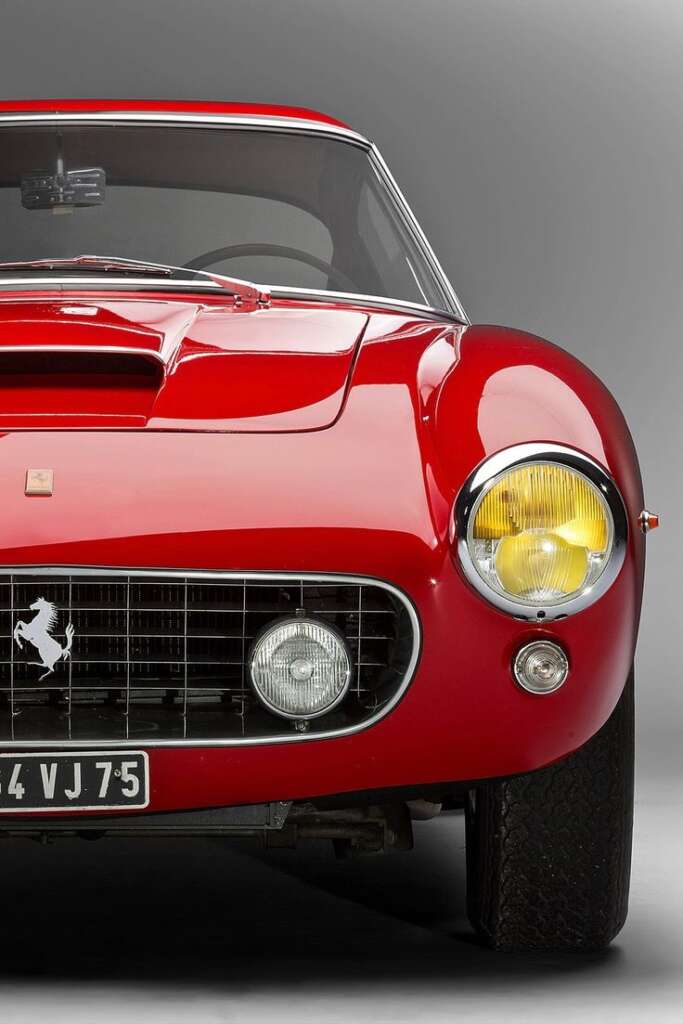
The Symphony of the V12: At the heart of the car lies the legendary 3.0-liter “Tipo 168/62” V12 engine designed by Gioacchino Colombo.
Colombo Design: This unit produces 300 horsepower and earns the “250” name because each cylinder has a displacement of approximately 250cc.
Aerodynamic Firsts: The GTO is one of the first Ferrari models to utilize a wind tunnel during its development process.
The Rear Spoiler: The iconic integrated rear spoiler was a stroke of engineering genius designed to provide downforce on the rear axle at high speeds.
Dry Sump System: This system, which ensures lubrication is never interrupted under high G-forces on the racetrack, was a pure racing technology for its era.
Lightweight Engineering: The chassis is a trellis structure composed of oval and circular tubes.
Aluminum Bodywork: The aluminum body panels are so thin they can be deformed by a misplaced touch, keeping the car’s total weight around a remarkable 880 kg.
Watt’s Linkage: The use of this geometry in the rear suspension restricted the lateral movement of the live axle, pushing cornering capabilities beyond its contemporaries.
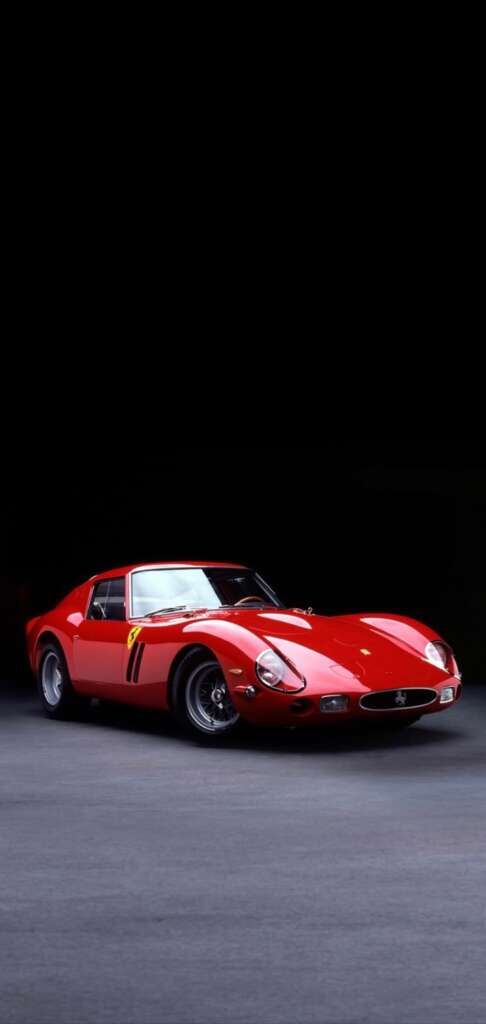
The Engine: Colombo V12’s Pinnacle
Table
Specification Value Ahead of Its Time
Type 3.0L V12 (Tipo 168/62) First synchronized 6-Weber carburetor setup
Power 300 HP @ 7,400 RPM 100 HP per liter (revolutionary for 1962)
Torque 294 Nm @ 5,500 RPM High-rev racing calibration
Compression 9.8:1 Road/race balance
First-Applied Technologies:
5-Speed Manual Transmission (before Porsche)
Most racing cars remained in 4-speed limbo
5th gear reduced revs on Le Mans’ long Mulsanne Straight
Tubular Chassis + Aluminum Coachwork
“Superleggera” principle: 880 kg curb weight
Logical ancestor to today’s carbon fiber
Pioneering Aerodynamics: “The Small Wing”
Rear window “ducktail” spoiler
First application reducing drag without generating negative lift
NACA ducts in front bumper (optimized air intake)
Dual Overhead Camshaft (DOHC) Heads
2 valves per cylinder (24 total)
Racing technology in Ferrari road cars for the first time
Chassis and Suspension: Racing Soul
plain
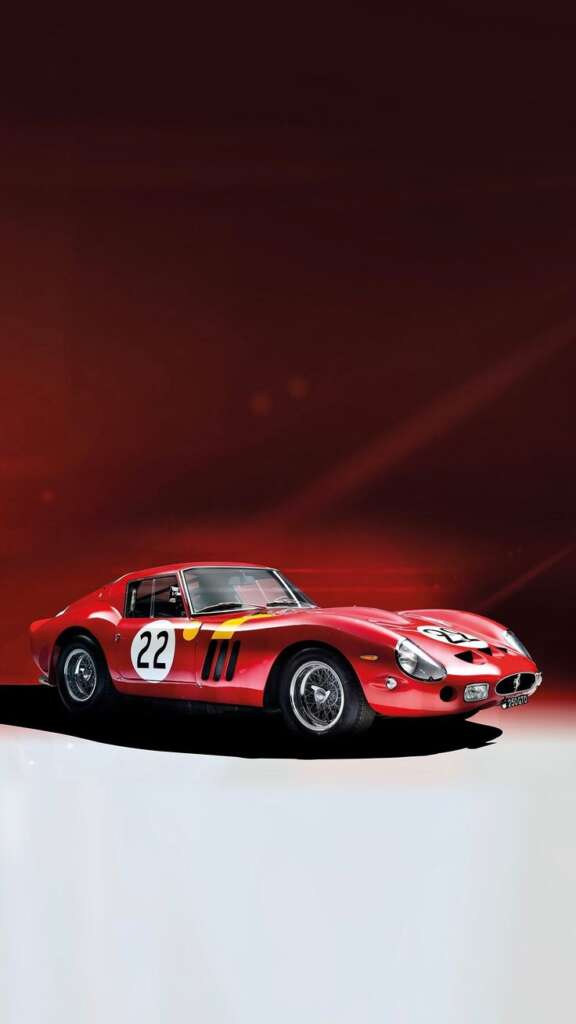
Front: Independent, double wishbone, coil springs
Rear: Live axle, semi-elliptic leaf springs
Brakes: Aluminum-bodied discs (Dunlop)
Steering: Pinpoint rack-and-pinion
Technical Paradox: The 250 GTO had to carry “luggage” and “seats” to satisfy road laws. Yet the trunk measured merely 2 cm deep to preserve rear window aerodynamics. The seats were leather specially cut for racing harness passage.
Production: The Mathematics of Legend
Table
Detail Number Significance
Total Production 36 units (1962-1964) Scarcity creating value
First Series (Serie I) 33 units 1962-1963, Bizzarrini/Forghieri signature
Serie II (1964) 3 units New GTO/64 body (more aerodynamic)
Special (330 GTO) 2 units 4.0L engine, longer wheelbase
PART III: MARKET, REASONS FOR LEGEND & PRESENT DAY
Why It Became Legendary
Table
Factor Explanation
Racing Victories 1962-1964 FIA GT Championship (three consecutive years)
Le Mans Legacy 1962 class winner, overall second (against 330 LMB)
Targa Florio Dominance over Sicily’s deadly mountain roads
Daytona Class victory at 24 Hours
Lethal Beauty 5 cars lost in competition (mechanical limits pushed)
Value Beyond Time: Price Evolution
Table
Year Event Price Context
1962 Factory delivery $18,000 Price of a new middle-class home
1971 First collector sale $10,000 Classic car market nonexistent
1985 William Harrah collection $300,000 Recognized as investment asset
1990 Pebble Beach auction $10M First “ten-million-dollar” car
2018 Greg Whitten sale $48.4M Analog value in digital age
2023 Private sale (estimated) $70M+ Physical art within NFT era
Present Day: “The Living Museum”
Ownership Ecosystem:
Table
Category Count Characteristic
Original condition ~15 Complete racing history, impeccable documentation
Restored ~18 Returned to factory specifications
“Driven” collection ~25 At least one track day annually
Static display ~8 Never started (value preservation)
Ferrari Classiche Certification: The notarized proof of authenticity. A GTO without it commands half value.
The Gentleman’s Agreement: Current owners (Ralph Lauren, Craig McCaw, Jon Shirley among them) maintain an unwritten code. The 250 GTO appears at Pebble Beach concours not for competition, but for communion. It is not displayed; it is shared.